
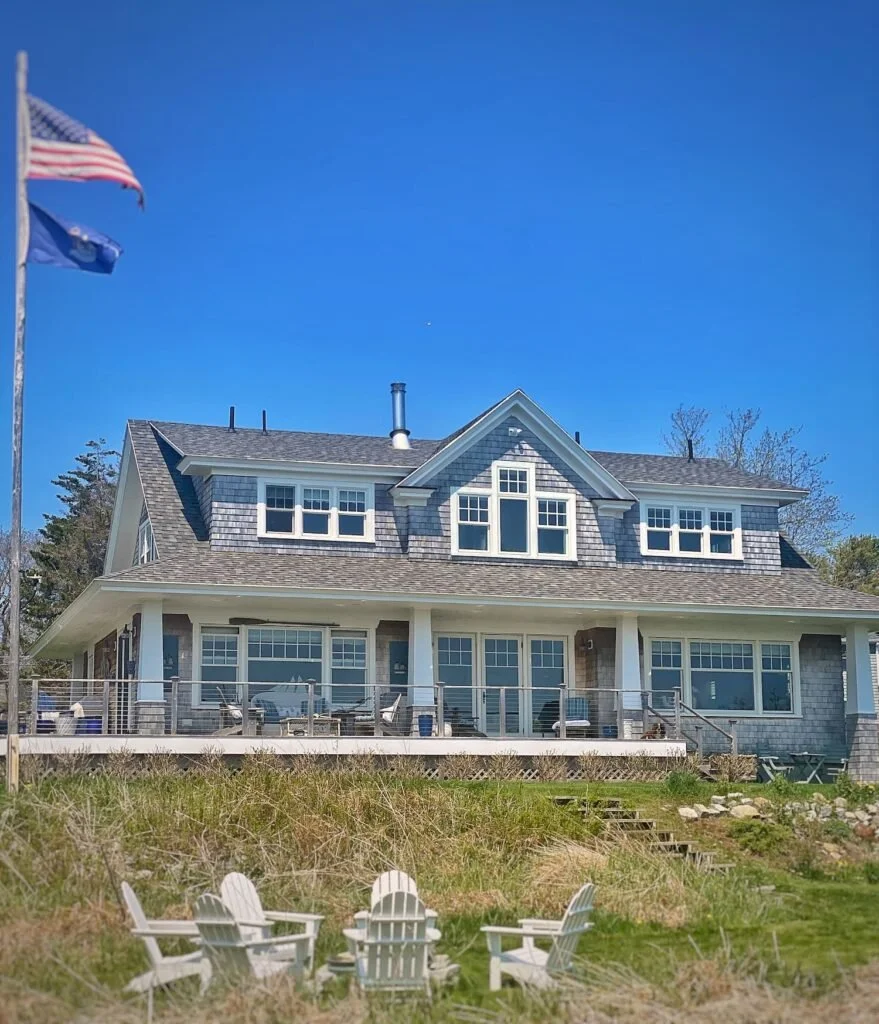
Relocating to Southern Maine
If you’ve been considering a move to Maine, here are the answers to some of your most asked questions.
Relocating to Maine: What to Know Before You Move
There are a lot of reasons people dream about moving to Maine.
The coastline. The small towns. The slower pace. The schools. The seasons. The ability to spend Saturday morning at the beach, drive to the mountains for the weekend and still be close enough to Boston when you need a bigger city.
But vacationing in Maine and living in Maine are two very different things.
If you're considering relocating to Maine, particularly Southern Maine, there are some things worth understanding before you start looking at houses.
Why Are So Many People Drawn to Southern Maine?
Southern Maine offers something that's increasingly hard to find: small-town coastal living without feeling completely disconnected from everything else.
You can live in a town like Kennebunk, Wells, York or Biddeford and have beaches, restaurants, trails and outdoor recreation minutes from home, while Portland and Portsmouth are still accessible and Boston is within reach.
For many people relocating from Massachusetts, Connecticut, New York and other parts of the Northeast, that balance is the attraction.
Life can feel a little less complicated here.
That's not to say Maine is inexpensive or idyllic every day. Winters are real. Coastal homes require maintenance. Traffic in beach communities changes dramatically in July. And you may drive farther for certain things than you're accustomed to.
But if you're looking for more space, more nature and a lifestyle that revolves a little less around rushing from one thing to another, Southern Maine can be pretty special.
Where Should You Live in Southern Maine?
This is usually the first question people ask me, and my answer is almost always another question:
What do you want your everyday life to look like?
The Southern Maine towns may appear close together on a map, but living in them can feel very different.
Kennebunk
Kennebunk is one of my favorite options for people who want a true year-round community while still being close to the coast.
You have downtown Kennebunk, Lower Village, Gooch's Beach, Mother's Beach, schools, restaurants, shops and established residential neighborhoods.
And depending on where you live, you may be able to walk or bike to the beach or across the bridge into Dock Square in Kennebunkport.
For someone relocating permanently rather than purchasing strictly a vacation home, Kennebunk can offer a particularly nice balance of community + coast + everyday practicality.
Kennebunkport
Kennebunkport is what many people picture when they imagine coastal Maine: historic homes, Dock Square, Cape Porpoise, lobster boats, beaches and beautiful coastal scenery.
But even within Kennebunkport, there are very different lifestyles.
Goose Rocks Beach offers a traditional beach-community feel.
Cape Porpoise has a quieter working-harbor atmosphere.
Downtown/Dock Square puts restaurants, shops and activity within walking distance.
And the more residential areas outside those pockets can feel completely different again with lots of beautiful land.
Kennebunkport generally commands a premium, particularly in highly desirable coastal locations, so understanding the micro-markets becomes important.
Wells
Wells gives buyers a wide range of options.
You can live near Drakes Island, Wells Beach or Moody Beach, choose a more traditional residential neighborhood, or move farther inland where properties may offer more land and space.
Wells can be particularly appealing to buyers who want proximity to the beach but don't necessarily need to live in a village setting.
It's also conveniently positioned between Kennebunk and Ogunquit, with access to the Maine Turnpike and Amtrak's Downeaster.
Ogunquit
If walkability is high on your wish list, Ogunquit deserves consideration.
The downtown, Ogunquit Beach, Marginal Way, Shore Road and Perkins Cove create a lifestyle where restaurants, shops and the ocean can all be remarkably close.
The tradeoff is that Ogunquit is a major vacation destination. Summer brings considerably more activity, and desirable properties can command premium prices.
For the right person, though, being able to walk out your door and experience one of Maine's best-known coastal towns is exactly the point.
Arundel
Arundel is a great option for buyers who want to be close to everything Southern Maine has to offer without necessarily living directly on the coast.
Bordering both Kennebunk and Kennebunkport, Arundel tends to have a more rural and residential feel, with opportunities for larger lots, more privacy and newer construction while still keeping the beaches, Dock Square, restaurants and shops of the Kennebunks within easy reach.
The town is also conveniently connected by Route 1 and I-95, which can make it appealing for buyers who need easy access north toward Portland or south toward Portsmouth and Boston. Arundel’s school system is part of RSU 21 along with Kennebunk and Kennebunkport, another detail relocating families may want to consider. And for anyone who loves being outside, the Eastern Trail runs through Arundel as part of its 65-mile Southern Maine route. I especially like Arundel for buyers who love the Kennebunk/Kennebunkport lifestyle but would rather have more space and a quieter setting than pay the premium to be right at the beach or in town.
York
York gives buyers several distinct communities to consider, from York Village and York Harbor to Cape Neddick and the beach areas around Long Sands and Short Sands.
It can be particularly appealing for buyers who still have ties to Massachusetts or New Hampshire because of its location farther south.
There's a wide variety of housing, too—from oceanfront and historic homes to traditional year-round neighborhoods.
Biddeford
Biddeford is worth understanding because there are several very different versions of it.
Downtown Biddeford has experienced significant redevelopment, with restaurants, breweries and former mill buildings creating a more urban environment.
Head toward the coast, however, and areas such as Biddeford Pool and Fortunes Rocks feel like completely different worlds.
For buyers who want Southern Maine but don't necessarily need the traditional Kennebunkport experience, Biddeford can open up some interesting possibilities.
Should You Live Directly on the Coast or Slightly Inland?
This can be one of the most important decisions you make.
Living close to the water can mean walking to the beach, beautiful views and that coastal Maine lifestyle you probably pictured when you started thinking about moving here.
It can also mean higher purchase prices, more seasonal traffic, flood considerations, salt and weather exposure, and potentially higher insurance and maintenance costs.
Move 10 or 15 minutes inland and the equation can change considerably.
You may get:
More house. More land. More privacy. Easier year-round living.
For someone relocating permanently, I'd encourage you to think about your Tuesday in February, not just your Saturday in July.
Where do you want to get groceries?
How far do you want to drive to school?
Do you want neighbors nearby?
Do you need easy highway access?
Are you commuting?
Would you rather walk to restaurants or have three acres and a barn?
Your answers can quickly narrow the search.
What Does It Cost to Live in Maine?
This is one area where some relocating buyers are surprised.
Maine isn't necessarily the inexpensive alternative to Massachusetts or New York that people sometimes imagine—particularly along the Southern Maine coast.
Housing costs can be significant in desirable coastal communities, and buyers should also consider:
Property taxes
Heating costs
Homeowners insurance
Flood insurance when applicable
Electricity
Snow removal
Private road maintenance
Well and septic maintenance
Older-home maintenance
Property taxes vary by municipality and by property, so I would never compare towns based solely on their mill rates without looking at assessed values and the actual tax bill for the home you're considering.
Maine Houses Can Be Different, Too
If you're relocating from outside New England, there may be some things you aren't accustomed to seeing.
Many Southern Maine properties have private wells and septic systems rather than public utilities.
You'll encounter homes heated with oil, propane, natural gas, electric heat pumps—or some combination of systems.
Older Maine houses can also have additions from different eras, fieldstone foundations, crawl spaces, seasonal components and plenty of quirks.
Near the coast, we also need to think about flood zones, drainage, wetlands, salt exposure and coastal weather.
None of these things automatically make a property problematic.
They simply mean you want to understand what you're buying and how it works.
Yes, You Need to Think About Winter
If you've only visited Southern Maine between Memorial Day and Labor Day, come back in January.
Maine winters are part of the deal.
The good news is that Southern Maine winters are also very livable when you're prepared for them.
Before buying, I would consider:
Heating system and annual heating costs. A large, poorly insulated older home can be very different to heat than newer construction.
Generator or backup power. Coastal storms and winter weather can cause outages.
Snow removal. Who plows the driveway? Is the property on a private road?
Roof and drainage. Snow, ice and freeze-thaw cycles matter.
Insulation and windows. Efficiency becomes much more noticeable when it's 15 degrees outside.
And then there's the upside.
Winter is when many coastal towns become quieter again. You get restaurants without summer waits, empty beaches, skiing and snowboarding within reach, and an entirely different version of Maine.
What About Schools?
For families relocating to Southern Maine, schools often become one of the biggest factors in deciding where to live.
School districts and high-school options vary by town, and school assignments shouldn't be assumed based simply on a mailing address.
Rather than choosing a town solely from online school rankings, I recommend researching the actual district, programs, transportation, extracurriculars and options that matter to your particular family.
Once we know what you're looking for, school boundaries can become part of the home-search process.
Can You Commute From Southern Maine?
Absolutely—but location matters.
Interstate 95 makes much of Southern Maine accessible to Portsmouth, New Hampshire, and Greater Boston. The farther south you live, naturally, the easier those drives generally become.
Southern Maine also has access to Amtrak's Downeaster, which connects Maine with New Hampshire and Boston, with stations including Wells, Saco, Old Orchard Beach seasonally, and Portland.
For someone who only needs to be in Boston occasionally, living in Southern Maine can be much more realistic than it initially sounds.
If you're commuting several days a week, though, I'd factor that heavily into where we search.
What If You're Moving From Massachusetts?
This is an especially common move.
If you're selling a home in Greater Boston or another higher-priced Northeast market, your budget may translate differently in Maine—but don't assume everything will be dramatically cheaper.
The biggest adjustment may actually be lifestyle rather than real estate.
Depending on where you choose to live, you may have fewer services immediately around you, drive farther for certain errands and discover that many businesses operate seasonally or on very Maine-like schedules.
In exchange, you may also discover that your morning walk involves the ocean instead of traffic.
For many people, that's exactly why they're moving.
Should You Rent Before Buying?
Sometimes—but I don't think everyone needs to.
If you don't know Southern Maine well and aren't sure whether you want Portland, Kennebunk, Ogunquit or something completely different, renting can give you time to explore.
But if you already know the general area, I would start by spending time in several communities before assuming you need to rent for a year.
Go to the grocery store.
Drive the school route.
Get coffee.
Walk around at 7:00 a.m.
Come back at 6:00 p.m.
Visit in November.
Drive through neighborhoods that aren't on the tourist map.
You're trying to figure out whether you like living there, not whether you'd enjoy spending a weekend there.
Buying Before You Move to Maine
A lot of relocation buyers aren't able to fly or drive to Maine every time an interesting property hits the market.
That's okay—but it makes having someone local particularly important.
For relocation clients, I can help narrow neighborhoods before we ever start seriously looking at houses. Once we understand the lifestyle you're trying to create, the search becomes much easier.
When the right property appears, detailed video tours, neighborhood context and honest feedback become especially valuable.
I don't just want to show you the kitchen.
I want you to know what's across the street, whether you can hear road traffic, what the neighborhood feels like, how far you really are from the beach and whether the location matches what you've told me you want.
One Thing I'd Tell Anyone Thinking About Moving to Maine
Don't start with the house. Start with the life you want to have here.
Do you picture walking to the beach every morning?
Do you want your kids riding their bikes around the neighborhood?
Do you want restaurants and coffee within walking distance?
Would you rather have five acres and barely see your neighbors?
Do you need to get to Boston regularly?
Are you retiring?
Working remotely?
Looking for a quieter place to raise your family?
Moving here permanently after years of spending summers here?
Those answers tell me far more than telling me you want "four bedrooms, three bathrooms and a two-car garage."
We can find the house.
First, let's figure out where your Maine life belongs.
Thinking About Relocating to Southern Maine?
You don't need to have everything figured out before you reach out.
In fact, that's often when it's most helpful to talk.
If you're considering relocating to Kennebunk, Kennebunkport, Wells, Ogunquit, Arundel, York, Biddeford or another Southern Maine community, I can help you understand the different towns and neighborhoods, compare what your budget buys in each area and start narrowing down where you might feel most at home.
Whether you're moving next month or simply wondering whether Maine could be right for you, let's start with a conversation about the life you're hoping to create here.
[LET'S TALK ABOUT YOUR MOVE TO MAINE →]
This guide is intended for general educational purposes. Property taxes, school assignments, insurance requirements, municipal regulations and other property-specific information should always be independently verified as part of your home-buying process.